3 hr
Melbourne: Ultimate 3-Hour Gourmet Laneway Walking Tour
Experience Melbourne’s legendary food scene on a guided walking tour through historic arcades, hidden alleys, and local culinary hotspots.
Reserve
Hand-picked by our editors — only the best 5 experiences from 12 reviewed.
Verified partners for every tour, free cancellation where available, and instant confirmation on every booking.
3 hr
Experience Melbourne’s legendary food scene on a guided walking tour through historic arcades, hidden alleys, and local culinary hotspots.
Reserve
3 hr
Explore Melbourne's culinary heart with a local guide on this 3-hour evening food walk through iconic laneways.
Reserve
3 hr
Explore Melbourne’s hidden laneways, gold-rush history, and iconic coffee culture on an intimate, expert-led walking adventure.
ReservePrices from verified partners. Availability updates in real time at checkout. Free cancellation policies apply where shown.
The landmarks, rooms, and views travelers on this tour remember — all visible on a single visit.
Famous for its European-style cafes and bustling atmosphere
Narrow city lane photography
One of the largest open-air markets in the southern hemisphere
Fresh market produce stalls
Historical shopping arcade featuring intricate mosaic floors
Victorian era architecture interior
A dedicated pedestrian lane filled with outdoor eateries
Outdoor lane dining scene
World-renowned for its ever-changing street art
Urban graffiti wall art
They complement each other; most visitors who do both call the guided melbourne food walking tour the more informative option, while the self-guided crawl offers superior independence.
| Feature | Top pick Guided Tour | Self-Guided Crawl |
|---|---|---|
Access to hidden vendors |
Exclusive partnerships provided | Public access only |
Curated historical insights |
Expert storyteller led | Requires independent research |
Flexibility of pace |
Fixed group schedule | Fully self-determined |
Cost efficiency |
Fixed service fee | Pay as you go |
Depth of local food knowledge |
Deep culinary storytelling | General observation only |
Group social experience |
Engage with travelers | Solo or private group |
| See tickets → |
Verdict: Securing your melbourne food walking tour tickets ensures you uncover secret CBD coffee roasters, whereas the self-guided melbourne food walking tour tour favors those wanting to explore the city at their own speed.
Choose your ticket, select your date, and reserve in under two minutes. Secure checkout handled by our verified partner.
Instant confirmation by email, with a mobile voucher you can save offline. No printing, no queuing at a collection desk.
Arrive at the entrance, show your voucher on your phone, and walk in. Most tickets include priority or skip-the-line access.
Practical details for your visit straight from our verified partners — hours, access, rules, and how to get there.
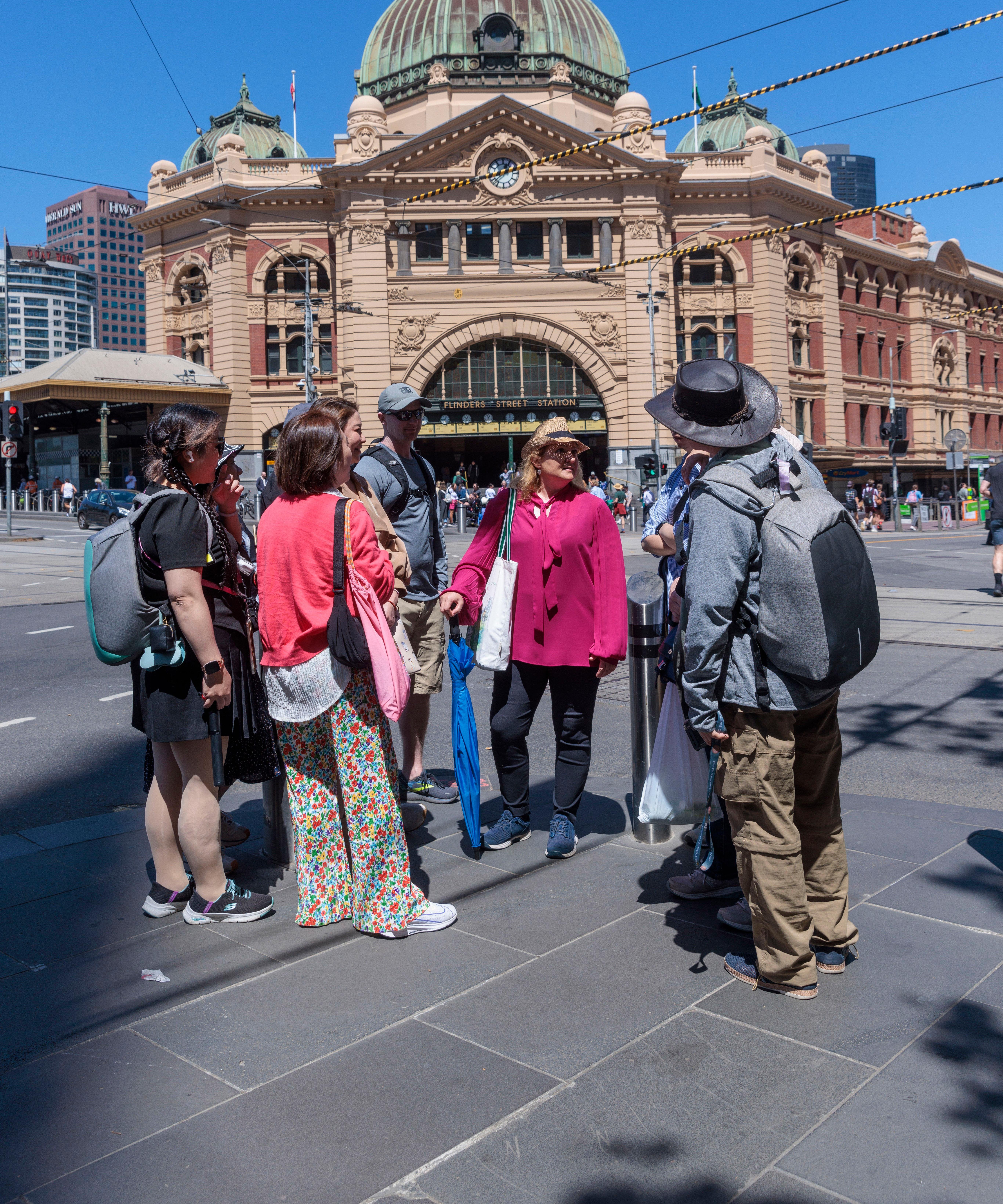
Corner of Swanston and Flinders St
Main entrance steps
Tram lines along Swanston St provide easy access to the CBD
The city is highly walkable from major rail stations
Wear comfortable walking shoes and dress in layers to accommodate Melbourne's shifting weather conditions.
Keep bags lightweight as you will be moving through crowded laneways during your melbourne food walking tour.
Photography is permitted throughout the melbourne food walking tour, though please respect private shop interiors.
The walking tour involves navigating city sidewalks and laneways, which may present challenges for those with limited mobility.
Mobile phones are permitted for capturing memories of your melbourne food walking tour and coordinating with your guide.
Families are welcome on the melbourne food walking tour, though children must be supervised at all times in busy traffic zones.
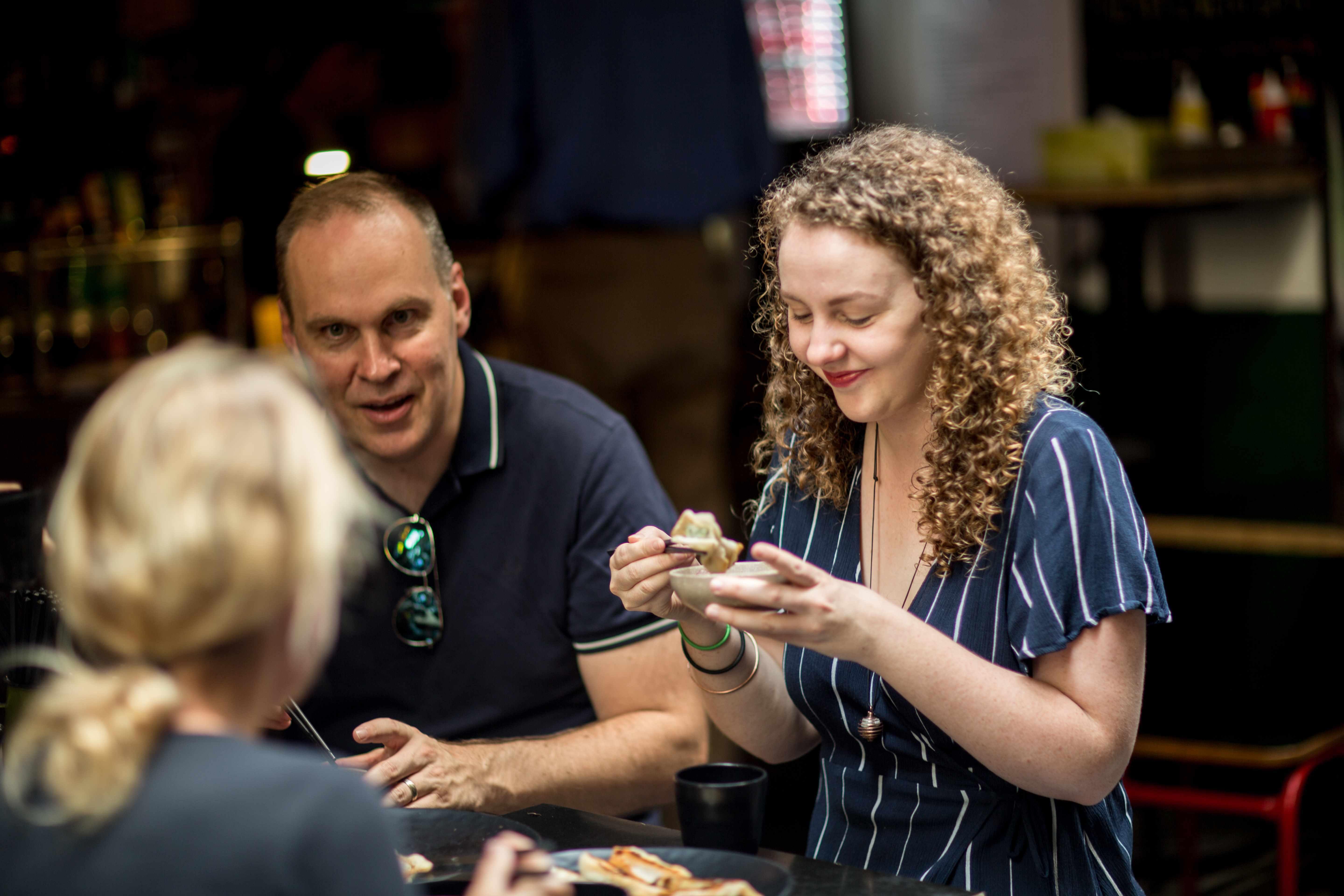
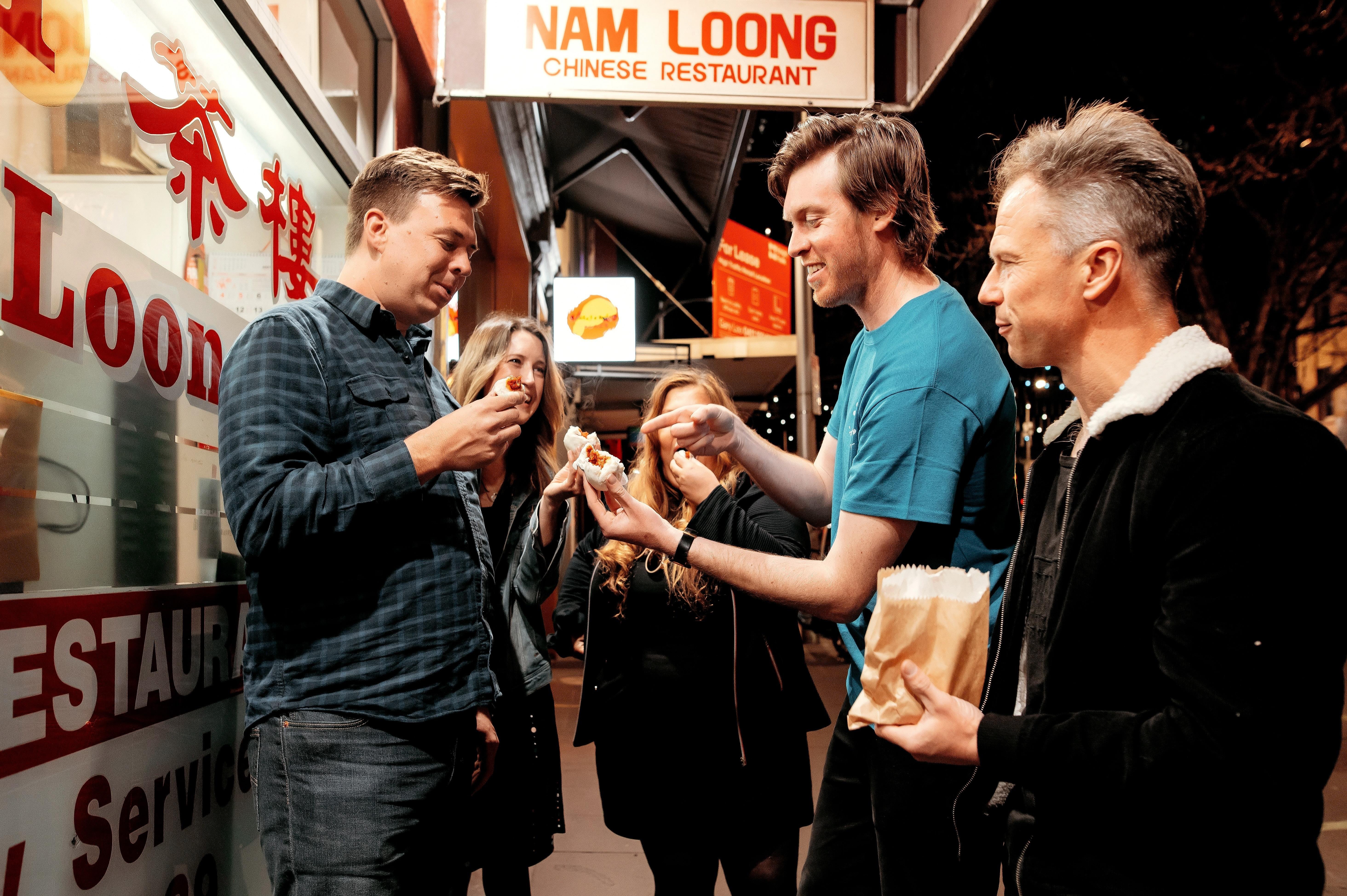
Food and drink are central to this experience, with multiple tastings included throughout the melbourne food walking tour.
Pets are not permitted on group tours for safety and hygiene reasons.
Ensure you arrive within the 09:00–16:00 window for the best vendor activity during your melbourne food walking tour.
Best time to go, insider tips, nearby landmarks, and the cancellation fine print — flip through to skim what matters to you.
How crowds, weather, and events shift across the year.
December to February offers warm weather perfect for outdoor food tours.
March to May provides mild temperatures and fewer crowds.
June to August is cooler, requiring layers during your walking tour.
September to November features beautiful blooms and pleasant city walking conditions.
Small details that turn a good visit into a great one.
Secure your melbourne food walking tour tickets well in advance to ensure availability.
Carry water as the walking pace can be brisk.
Melbourne weather changes rapidly; bring a light jacket.
Use your guide's knowledge to find extra spots after the tour.
Arrive within the 09:00–16:00 window for optimal vendor availability.
Non-bookable sights within a short walk — free to visit, easy to pair.
Historic railway station with iconic yellow facade
Striking Gothic Revival cathedral located in the CBD
Oldest surviving arcade in Australia with luxury shops
Famous library with grand reading room and lawns
Flexible, no hidden fees.
Cancellations made within 24 hours of the tour start time are non-refundable. All bookings carry a 0 AUD entrance fee for the guided service.
Hand-picked options within walking distance — pick a district for vibe, or a specific hotel for convenience.
Riverside hotel with elegant rooms
Convenient central location for travelers
Affordable choice near the city center
Melbourne's laneway network emerged in the 1850s as service corridors behind Hoddle Grid frontages, forgotten until the late 1990s when café operators claimed the narrow bluestone passages as dining frontiers. What began as a handful of espresso bars in Hardware Lane and Degraves Street expanded into a culinary geography spanning three dozen laneways across the Central Business District, each corridor developing its own character through immigrant-run kitchens, roastery outposts, and bar-restaurant hybrids that turned utilitarian alleys into destination dining precincts. By 2010, the city's laneway renaissance had attracted international press, and by 2015, the network supported more than 400 food and beverage operators within a one-kilometre radius of Flinders Street Station. The concentration of culinary diversity within Melbourne's laneways reflects successive waves of migration: Italian espresso traditions laid the foundation in the postwar decades, Greek and Lebanese influences arrived in the 1970s, and Vietnamese, Thai, and Chinese operators reshaped the laneway food landscape from the 1980s onward. Today's laneway dining culture layers these histories with contemporary Australian techniques, third-wave coffee roasting, natural wine programs, and chef-driven tasting menus served in spaces no wider than five metres. The architectural constraint of the laneway — its narrowness, its lack of vehicular access, its cobblestone underfoot — shapes the dining experience itself, creating an intimacy and urban texture absent from conventional streetfront hospitality. A melbourne food walking tour condenses this culinary evolution into a navigable itinerary, connecting roastery visits, artisan bakeries, hidden dim sum kitchens, and cocktail bars accessible only through unmarked doors. The format privileges depth over breadth: rather than sampling widely, most tours focus on eight to twelve tastings across three hours, pairing each stop with context about the operators, the ingredients, and the laneway's own social history. Guides lead groups of twelve to sixteen through Centre Place, Block Arcade, Cathedral Arcade, and Hosier Lane, moving between coffee cupping sessions, Cantonese dumpling workshops, Greek meze platters, and natural wine flights, each course anchored to a specific laneway address and its backstory. The walking distance rarely exceeds two kilometres, but the vertical and lateral detours — up cast-iron staircases, through tiled arcades, into basement wine cellars — extend the spatial experience beyond the linear route. The tours operate daily from 9:00 to 17:00, with morning departures capturing the laneway coffee ritual and afternoon slots coinciding with kitchen prep and early-evening bar service. Optimal arrival windows align with vendor activity: post-9:00 for roastery tastings, mid-afternoon for dumpling production and cheese counters. The culinary walking tour format has become a primary access point for visitors unfamiliar with the laneway network's unmarked entries and shifting operating hours, offering both navigation and narrative in a city where the best dining often occurs below street level or behind facades that signal nothing from the footpath.

"The architectural constraint of the laneway — its narrowness, its lack of vehicular access, its cobblestone underfoot — shapes the dining experience itself."
A step-by-step walkthrough of the visit — what you'll see, how long each stage takes, and the details that matter.
You meet your guide at the corner of Flinders and Swanston, then turn north into Degraves Street, where the bluestone underfoot narrows to four metres and the espresso scent thickens. Your first tasting happens at a roastery counter wedged into a former loading bay: a single-origin pour-over from the Yirgacheffe highlands, served with tasting notes on bean provenance and roast profile. The guide explains how the laneway café model emerged in the 1990s as rent-affordable alternatives to streetfront sites, then leads you through Block Arcade's mosaic-tiled corridor to a second coffee stop, this time a flat white paired with sourdough from the bakery two doors down. You cross Bourke Street into Hardware Lane, pausing at a Cantonese dumpling kitchen where the chef demonstrates pleating technique before you taste har gow and siu mai still warm from the bamboo steamer. The tour moves laterally through Centre Place, stopping at a Greek meze counter for saganaki and olive oil tasting, then descends a cast-iron staircase into a basement wine bar where the sommelier pours two natural wines — a skin-contact Riesling and a Heathcote Syrah — alongside cured meats and aged cheeses. Your final stop is a hidden cocktail bar accessed through an unmarked door in Hosier Lane, where you finish with a gin-based aperitif infused with native botanicals. The entire loop covers less than two kilometres, but you've crossed a century of migration history and tasted the layered culinary identity that defines Melbourne's laneway dining culture.
The tour operates daily from 09:00–17:00.
While laneways are public, uneven surfaces can make parts of the melbourne food walking tour difficult for some.
Bring water, sunscreen, and a rain jacket for your melbourne food walking tour.
Yes, children are welcome on the melbourne food walking tour when supervised.
You can purchase melbourne food walking tour tickets directly through the tour page.
Cancellations made within 24 hours are non-refundable, and service is a 0 AUD guided tour.
Yes, photography is permitted on the melbourne food walking tour.
The meeting point is in the Melbourne Central Business District.
We recommend the 09:00–16:00 arrival window for the best experience on your melbourne food walking tour.
No, pets are not permitted on the melbourne food walking tour.